Studios at the Door: When Game Industry Interviews Happen on Campus
Since 2014, leading game studios have visited Media Design School at Strayer (MDS) to interview third year Game Development students before they graduate - offering early industry exposure and, in some cases, employment.
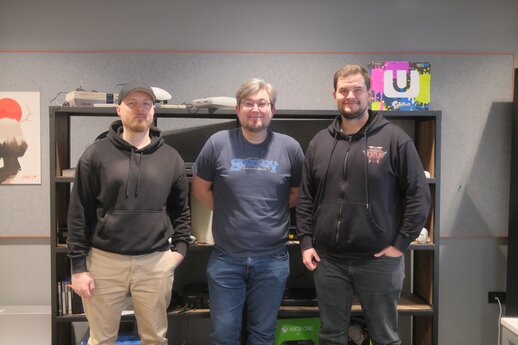
At the end of last year, Grinding Gear Games returned to campus to meet final year students in a series of focused interviews. Known globally for its work on Path of Exile, the studio spent the day reviewing portfolios, meeting programmers and artists, and identifying potential future hires.
They were joined this year by PikPok, who conducted interviews remotely due to release schedules. Over the past decade, other studios including A44 Games, Outerdawn and BuildMedia have also taken part, with further interest emerging as the industry continues to grow.
For Ivan Khmel, Programme Director for the Bachelor of Creative Technologies, the model has always been about connection.
“Logistically, it makes sense for studios to come here and meet 30 or 40 students back-to-back. They can quickly see who stands out, and then invite those students for a second interview at their premises.”
The format is simple: short 10 to 20 minute interviews, portfolio-led conversations, and a chance to put a face to a name.
A First Step Into Industry
For many students, these sessions are their first professional interview. Meeting studios in a familiar environment can make a meaningful difference, particularly for those who are highly capable but less naturally confident.
“It’s on their turf. They know the space. It’s still serious, but it’s manageable. Even if they don’t get the job immediately, they’re now on the studio’s radar.”
That visibility matters. Some students secure roles straight away. Others find that months later, when positions open, the studio already knows who they are. The initial conversation becomes a foot in the door.
Importantly, the opportunity extends beyond Auckland-based students. Online learners and those from across Aotearoa are invited to attend in person if they choose. In previous years, students have travelled significant distances to take part - and that initiative has not gone unnoticed.
Why Studios Return
Studios consistently comment on how quickly graduates adapt once hired.
Where it might take a typical graduate a year to fully integrate into a studio, our grads often get there in three to six months.”
The reason lies in focus. Students specialise in games from day one. Programmers build systems for real-time engines rather than generic applications. Artists create assets designed for production pipelines. Throughout the degree, the two disciplines work together in studio-style collaboration, mirroring industry environments.
That alignment shortens the gap between graduation and professional contribution. It is not about shortcuts - it is about relevance.
Opportunity With Perspective
On-campus interviews have become a valued tradition, but they are never positioned as an entitlement. Hiring cycles shift. Studios scale up and down depending on release schedules and investment climates. Some years see multiple studios visiting; others are quieter.
Students are encouraged to treat these interviews as one pathway among many, not the only route into industry. The emphasis remains on building strong portfolios, developing professional confidence, and taking ownership of career momentum.
When studios do step onto campus, however, it reflects something significant. It signals an ongoing relationship between education and industry, built on trust and demonstrated graduate capability.
And for those considering where to develop their craft, that proximity to industry speaks for itself.