From Classroom to Global Impact: MDS Students join Infosys InStep Internship in India
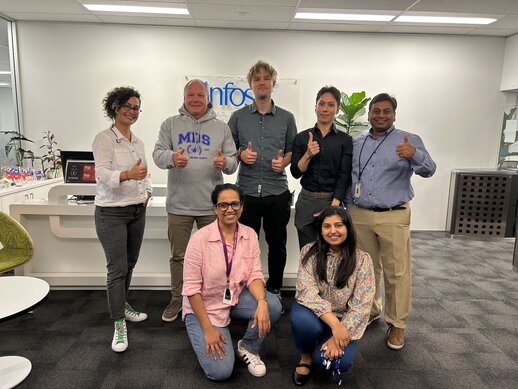
For a group of Media Design School at Strayer (MDS) students, an eight-week internship in India with Infosys, an AI first business consulting and technology services company, offered more than just industry experience, it provided a firsthand view into the scale, complexity, and future of technology on a global stage through the company’s flagship global internship, InStep.
InStep was launched 1999 with a vision to bring the world’s brightest students from renowned universities across the globe to India and Infosys. Over the years, the program has grown into a globally recognised initiative, consistently ranked World #1 by Vault for five consecutive years, while serving as a powerful bridge between academic learning and real‑world global impact.
A Global Tech Ecosystem
Infosys has global reach with the large workforce in New Zealand supported by global capability supporting major New Zealand clients, including banks, insurers, telcos, agri-tech, retail, energy and government organisations. The company delivers everything from organisational change, legacy system transformation and cloud to cutting-edge AI and digital transformation.
During their time in India, MDS students from the Bachelor of Software Engineering (Artificial Intelligence) programme were based at Infosys HQ in Bangalore, gaining exposure to Infosys’s metropolitan hubs designed to support regional workforces. This structure reflects a broader shift in how global tech companies operate with decentralised, scalable, and increasingly AI-driven solutions.
They were then invited back to the New Zealand Infosys Head Office in Auckland to present their projects and findings to leadership, creating yet another network for the students to further their future opportunities.
Learning in an AI-First Environment
Infosys is an AI-first organization, with a strong focus on responsible AI, automation, and workforce upskilling. Students were immersed in its tech landscape, working on real-world applications and emerging technologies.
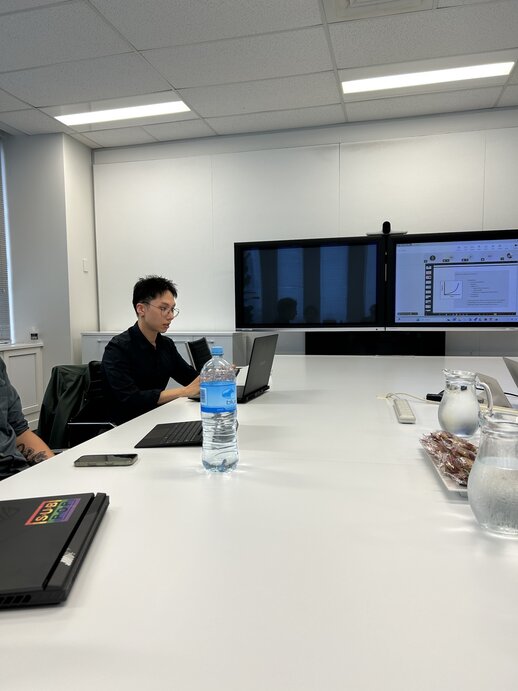
Duong ‘Dono’ Bach, contributed to the development of a large language model (LLM) based system designed to match resumes with job descriptions, a practical application of AI in recruitment. The project required not just technical execution, but also an understanding of existing infrastructure and identifying meaningful use cases.
I wasn't sure what to expect going in to the InStep internship programme, but it was an awesome opportunity. It was hard work, but I learned a lot that I believe it will help me reach my career goals faster.”
Another student, Jamie Farrel, worked on a conversational AI system designed for a mechanical lab environment. The project is evolving, with plans to expand into larger deployments and collaboration.
Foster Rae, meanwhile, pursued a research-driven project in robotics, training a robotic face to lip-sync by studying protocols and policies around robotics then building training dataset through simulation. He had to break down speech into its smallest movements to accurately map the servo-motors, while also developing an approach for blending the moves and sounds to reduce the usual robotic uncanniness. He embraced this learning experience enthusiastically, and it played a key role in pushing him beyond his limits and accelerating his growth.
Real Responsibility, Real Growth
After an initial onboarding phase, students were given significant autonomy. They were encouraged to identify problems, propose solutions, and shape their own projects, supported by mentors but driven by their own initiative.
This self-directed approach pushed students beyond technical skills. They developed:
- Independent problem-solving abilities
- Confidence working in large, distributed teams
- Exposure to global collaboration (including meetings across time zones)
- A deeper understanding of emerging fields like agentic AI
As one student reflected, being surrounded by highly skilled professionals created both pressure and motivation, ultimately accelerating their learning far beyond expectations.
The Value of an MDS Foundation
Dono noted that he chose MDS due to our comprehensive and industry-focused curriculum and was particularly impressed by how the course was designed to cover not just the fundamentals, but also the latest technologies and trends in software development. “This breadth and depth of coverage aligned perfectly with my learning goals,” he says.
The coding fundamentals and problem-solving mindset developed during their studies allowed them to quickly adapt, contribute meaningfully, and push into more advanced areas.
More importantly, the internship offered something equally valuable: context.
Working within a global organisation exposed students to how technology is actually deployed at scale, how teams collaborate, how decisions are made, and how innovation is balanced with real-world constraints.
Beyond the Work
Infosys InStep extends well beyond the workplace, offering interns meaningful immersion into India’s rich culture and diversity through thoughtfully curated events, leadership interactions, and excursions to the iconic Mysore campus.
It gave them the opportunity to build relationships with international colleagues and mentors and discover themselves along the way. For many, it was their first exposure to a truly global workplace. Upon reflection of the experience, Dono provided his outlook for those who were interested in Infosys’ InStep initiative: "If you’re unsure, try anyway. That’s how you discover what you’re capable of."
Looking Ahead
Infosys continues to invest heavily in graduate talent across the Asia-Pacific region, with hundreds of hires annually and increasing demand for AI-focused skill sets. Initiatives like InStep play an integral role in this ecosystem, offering students an early, immersive exposure to real‑world industry challenges, global teams, and cutting‑edge technologies.
For MDS students, this internship represents more than a single opportunity: it’s a glimpse into the future of their industry.
As technology becomes more global, more AI-driven, and more interconnected, experiences like this don’t just enhance employability, they reshape how students see their place in the world and give them experiences that accelerate their ability to move into the workforce and make meaningful impact.
You can find out more about our Artificial Intelligence programmes here.