MDS Lecturer Nouhad Waheed Becomes New Zealand’s First Houdini Certified Instructor
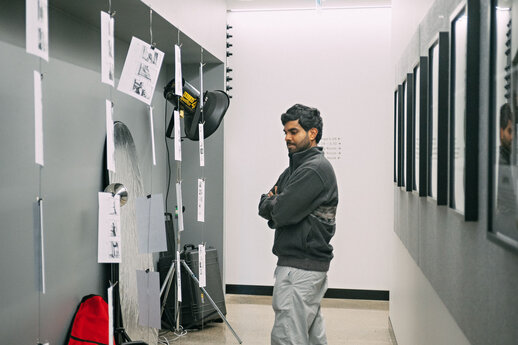
Bachelor of Art & Design (3D Animation & VFX) Lecturer Nouhad Waheed has become New Zealand’s first Houdini Certified Instructor - and only the twentieth person in the world to achieve the certification. The milestone reflects both the growing importance of Houdini across the global screen industry and MDS’s commitment to staying at the forefront of emerging technology, industry practice, and future-focused creative education.
As studios increasingly adopt procedural workflows, simulation tools, and real-time environment creation pipelines, Houdini has become one of the most in-demand software platforms across VFX, animation, and game development. For Nouhad Waheed, Lecturer on the Bachelor of Art & Design - 3D Animation & VFX at Media Design School at Strayer (MDS), becoming New Zealand’s first Houdini Certified Instructor was about more than achieving another qualification - it was about ensuring students are learning the tools and workflows shaping the future of the industry.
Bringing Industry Evolution into the Classroom
Developed by SideFX, Houdini is widely used across film, television, and game production for procedural effects, environment creation, simulations, and technical workflows. While the software has long been respected within the industry, Nouhad says its accessibility and adoption have accelerated significantly over the past decade.
“Houdini has consistently been growing its market share,” he explains. “The software has become far more user-friendly, and now you’re seeing more and more studios integrating it into their pipelines. Everybody in industry is using Houdini in some capacity.”
The certification itself is highly selective. Candidates must demonstrate years of teaching experience, provide evidence of curriculum development, and complete a rigorous technical examination covering all aspects of the software.
“When I completed the certification, I was only the twentieth person in the world to receive it,” says Nouhad.
What makes it difficult isn’t just using the software - it’s being able to teach it effectively.”
That distinction between industry expertise and teaching capability is something Nouhad believes is essential in creative technology education.
“You can be incredibly skilled at software, but that doesn’t always mean you can communicate those ideas clearly,” he says. “Working directly with students helps you understand the questions they ask and where people get stuck.”
Preparing Students for the Future of VFX
MDS’s Bachelor of Art & Design (3D Animation & VFX) combines creative storytelling with technical production skills, giving students hands-on experience across the full 3D pipeline. Students learn industry-standard tools and workflows while developing specialist skills in areas such as animation, modelling, compositing, technical art, and visual effects.
For Nouhad, integrating Houdini more deeply into the programme reflects a broader focus on preparing students for the evolving realities of production pipelines.
“One of the biggest differences with Houdini is the way it changes how you think,” he explains.
Instead of simply creating a single object, you’re building systems and processes. It teaches students problem-solving and procedural thinking, which is becoming increasingly valuable in industry.”
This year, MDS officially began transitioning key modules from Maya to Houdini, further embedding procedural workflows into the curriculum and exposing students to the tools increasingly used by global studios.
The programme’s industry focus is also reinforced through faculty who remain actively engaged with emerging technologies and production trends. Alongside teaching, Nouhad is currently developing an introductory Houdini video series designed to help beginners approach the software with confidence.
“I wanted to create something that makes Houdini feel approachable,” he says. “A lot of people are intimidated by it at first, so the goal is to answer the kinds of questions students actually ask when they’re starting out.”
Looking Beyond Traditional Production Pipelines
Nouhad also believes the future of 3D production will increasingly blend procedural workflows with rapidly advancing technologies such as LiDAR scanning and real-world environment capture.
“We’re moving towards workflows where instead of manually recreating environments, you can scan them and process that data directly,” he explains. “That opens up huge opportunities for filmmaking, world-building, and asset creation.”
For students, exposure to these emerging technologies offers valuable insight into where the industry is heading - and reflects MDS’s wider commitment to future-focused creative technology education.
“As educators, we have to keep evolving,” says Nouhad. “Students today are learning in an environment where technology changes incredibly quickly. It’s important that we stay connected to industry and continue bringing those developments into the classroom.”
By combining industry-connected faculty, emerging technologies, and hands-on learning, MDS’s Bachelor of Art & Design (3D Animation & VFX) continues to equip students with the creative and technical skills needed for careers across animation, VFX, digital production, and beyond.