Liam Bennett - Graphic Design Graduate Spotlight
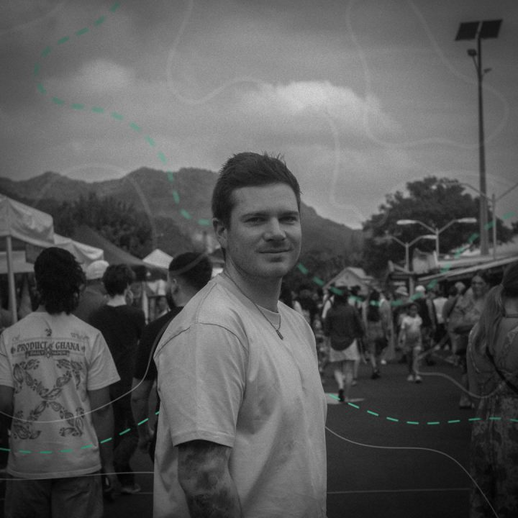
Meet Liam Bennett, a Graphic Design graduate from our Bachelor of Media Design programme, whose graduating project explores how design can support adults with ADHD through a considered blend of digital and physical experiences.
Tell us a bit about yourself
Kia ora, my name is Liam, and I’m a multidisciplinary designer based in Tāmaki Makaurau, Auckland, who enjoys all things digital, especially when they can take on a physical form or be experienced in the real world. I’m passionate about collaborating with other designers and clients to create grounded and authentic experiences with people at the heart.
Outside of design, I’m drawn to street photography, where I focus on capturing the atmosphere and feeling of a moment. Born and raised in Whanganui, I originally began my career as an Aeronautical Engineer, where I developed a strong attention to detail and a love for crafting things by hand. My path to design was definitely not a smooth transition, but over time I realised I wanted more freedom to express creativity and have greater input in the work being created, which naturally led me to where I am now.
What was the focus of your graduating project?
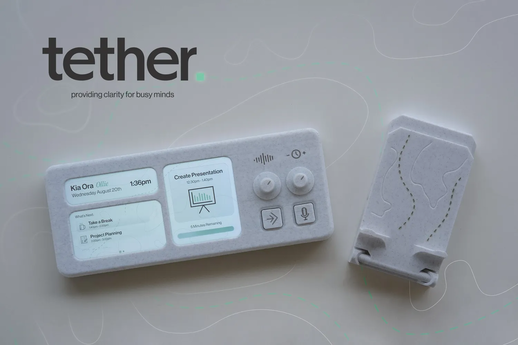
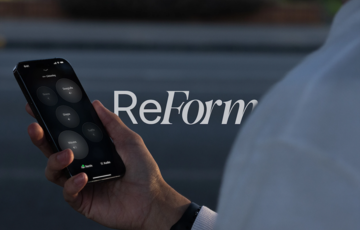
My capstone project focuses on a speculative device called Tether, which addresses the challenges caused by a lack of executive function for adults with ADHD. I felt inspired to explore something that affects roughly 1 in 20 Kiwis and many people in my circle. Many ADHD apps fail to support users effectively, as they introduce distractions or are easy to ignore.
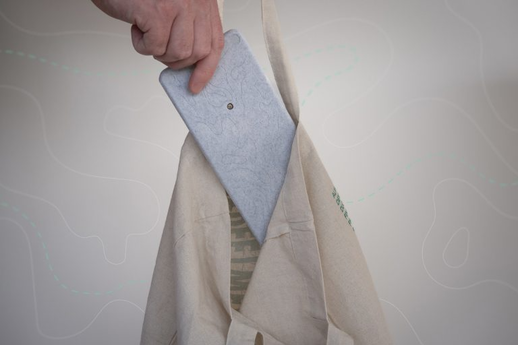
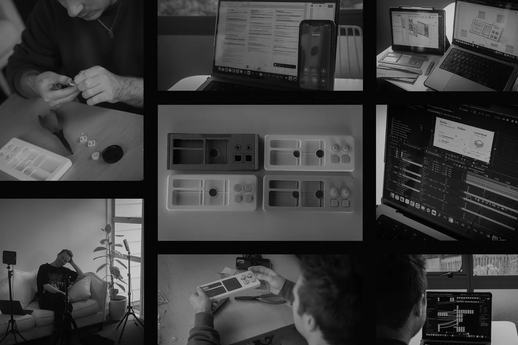
Research shows adults with ADHD prefer digital management tools but often find them too interruptive, whereas glanceable physical tools such as planners or whiteboards are easier to reference. This is where Tether excels. Developing Tether involved a heuristic research approach, along with ethnography and autoethnography, as empathising with users was crucial to understanding their challenges. The project also allowed me to explore multiple mediums throughout the process.
For the product visuals, I was inspired by the simplicity and analogue aesthetic of Teenage Engineering’s equipment and the design processes of product designer Mark Stanisic. I used a method called Fusion Flow, which allowed me to quickly iterate and test 3D models and printing methods despite being new to 3D design. This approach helped avoid delays and enabled me to refine both the functionality and aesthetic of the device. The hope is that people can use Tether seamlessly within their office spaces or at home!
Why did you choose to study the Bachelor of Media Design?
I was drawn to studying the Bachelor of Media Design at MDS because of its practical and industry focused approach. Throughout my studies, we are given numerous internal design briefs that closely mirror real world industry challenges, alongside opportunities to work on live briefs with real clients.
When researching the school, I looked at past capstone projects and was impressed by the high quality and calibre of work produced by the past students. I was also encouraged to see that, despite choosing a major, there is freedom to explore any medium or project concept, without restriction (within reason).
This mix of flexibility and hands-on, industry focused learning made MDS my number one pick. As I had changed careers, I really wanted to get back into work as fast as possible, and thankfully the school offers a two and a half year accelerated programme, trimming six months from study time (not recommended if you love long summer holiday breaks…)."
What did you enjoy most about the programme?
I really wouldn’t know where to start. I’ve absolutely loved working alongside the other talented designers in my cohort - they’ve inspired me to lift my game from day one. The level of talent coming out of the school is mindblowing. At the same time, the lecturers have been really supportive and helpful, though they aren’t afraid to pull you back to reality if they see that your design isn’t reaching its potential.
Working with real clients and industry designers has been a highlight, making me genuinely excited about collaborating with these professionals in Aotearoa’s growing design industry. I’ve had the opportunity to work with Spark New Zealand twice and earned three Best Awards and one finalist category. I credit the teams and lecturers I worked with, along with the passion I put into each project for the success. The reactions and feedback we received when presenting these projects were truly priceless and reinforced how rewarding it is to see ideas make an impact.
What was your biggest challenge while studying?
I think my biggest challenge has been learning to slow down and truly iterate, rather than jumping straight into the first idea that comes to mind. Coming from an engineering background, the goal was always to create a design or solution that simply got the job done, there wasn’t much room for exploring multiple directions or refining concepts. In design, however, iteration really is everything. You quickly learn that your first idea is rarely your best one, and taking the time to explore, test, and question work always leads to a stronger outcome.
Outside of design, another major adjustment for me was shifting from a job where I was constantly on my feet to one that requires long hours in front of a screen. It’s a completely different kind of focus, and it took time to get used to.
Who (or what) inspired you to pick design as a career path?
Before entering design, I had no connection to anyone working in the field. My first experience came when a group I knew needed a logo. I figured, how hard could it be? Opening Adobe Illustrator for the first time was daunting but it revealed a world of creative possibility. When I finished the logo, the positive feedback I received was overwhelming and even now people still mention it.
Looking back, the design itself makes me cringe a little, but what can I say, like many guys in their early twenties I went through a skull phase. I couldn’t shake the addictive feeling of crafting something digitally and creating something visual that people connected with. That moment eventually pushed me to pursue design more seriously.
Who is your favourite designer?
It’s hard to pinpoint a single favourite designer because I’ve been drawn to so many different styles throughout my time at university. Early on, I was inspired by designer Jon Contino and his talent for hand-drawn typography, which led me to buy his book Brand by Hand. I admired how his work felt raw and personal while still being commercially strong, something I try to weave into my own design process.
Outside the design world, someone who has inspired me for years is Austin Augie, a BMX rider turned photographer and videographer based in New York. His documentary style work captures the beauty of everyday life and culture around the world, from India and Vietnam to Morocco and Japan. His content feels honest and cinematic, often shot on both film and digital cameras. I love how he creates a sense of authenticity and atmosphere in every frame, and I’m really looking forward to his next photography book, which he recently teased.
What's next for you?
First, I’m planning to take a short break, but after that, I’m hoping to find work (touch wood). Ideally, I’d like to step into a role in Tamaki Makaurau where I can continue creating meaningful and fun design work while continuing to build my skills. I’m excited by the idea of joining the community of designers who are shaping the future of design in Aotearoa and contributing to projects that make an impact.
Where can we see more of your work?
You can check out some of my past projects on my portfolio site, where you’ll also find links to my Instagram, LinkedIn, and email. They say LinkedIn is where the cool kids hang out, so feel free to reach out there as well!
Portfolio
LinkedIn
Instagram
Email
Find out more about the Bachelor of Media Design
Article courtesy of our friends at Design Assembly