Pinball, Roguelikes, and a $759m Industry: Meet the MDS Lecturers Shaping NZ Games
Media Design School at Strayer lecturers Rourke Gray-Mason and Jeremy Teal have teamed up to develop Pinball Hero, a project that reflects both their teaching practice and ongoing engagement with contemporary game design, highlighting the steady growth of the New Zealand games industry.
We are proud to see our faculty amongst the thriving New Zealand game industry which according to a survey from the New Zealand Game Developers Association (NZGDA), reports that the total revenue for local game developer studios has been rising steadily each year since 2018, shooting up 38% between 2024 and 2025 with a market revenue of NZ$759m, almost doubling Australia’s growth in 2024.
What is Pinball Hero?
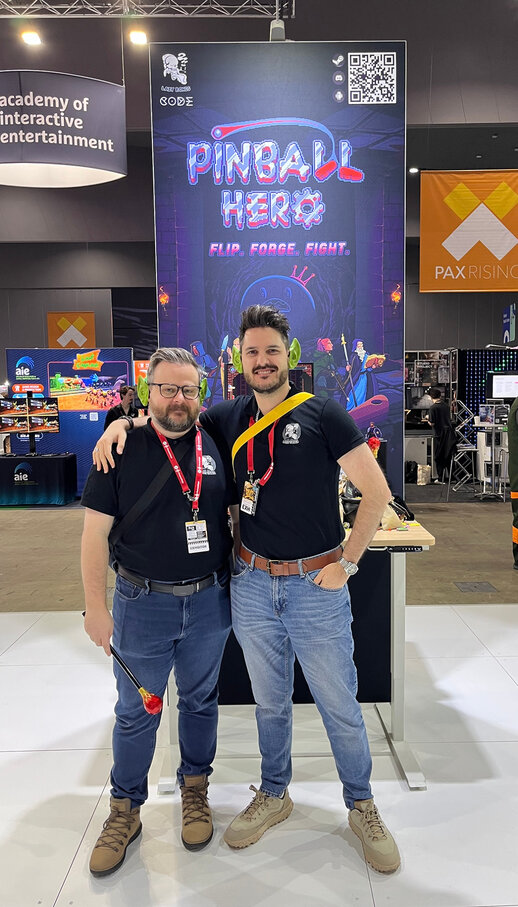
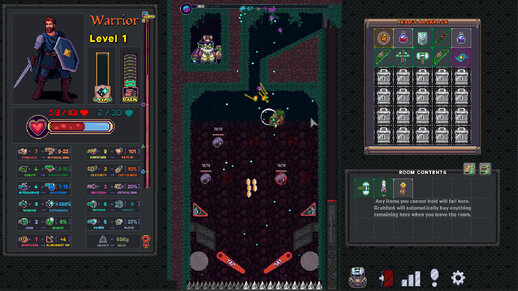
Rourke Gray-Mason and Jeremy Teal, both lecturers in games at Media Design School at Strayer, have founded indie games studio Lazy Bones and created Pinball Hero, a fast-paced roguelike game where pinball and RPG are combined into one genre. Pinball Hero has you launching your chosen hero as a pinball where they battle enemies with off-the-wall antics, explore branching levels through mystery doors and discover hundreds of powerful items to eventually reclaim your soul.
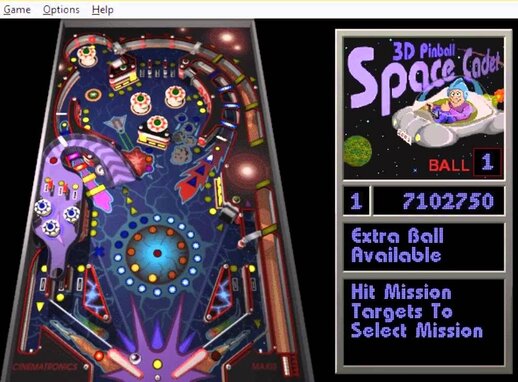
“Our inspiration came from Full Tilt! Space Cadet which you may recognise if you ever used a Windows PC back in the day. A lot of people know what it is, but more importantly many people overseas know it too. So, loads of people, even if they aren’t interested in classic pinball, know how to play Pinball. We’re not catering to people who just enjoy classic pinball, but people who like rogue-likes with a twist,” says Rourke.
Pinball Hero started as a passion project, which Rourke and Jeremy have been working on since 2023. It proved itself to be a bit of a programming challenge, despite seeming like a simple game on the surface.
“When you’re playing the game, there’s a lot of things going on under the hood. We had to consider the physics of not only the hero itself, but the enemies getting hit, the walls, the paddles and the items. Over the development we’ve encountered some pretty funny bugs.”
How has Pinball Hero been doing?
After playing the game, it comes as no surprise that that the New Zealand Centre of Digital Excellence, known as CODE, sees potential. CODE Funding supports the Aotearoa – New Zealand game development ecosystem by assisting diverse creators and studios to develop digital game prototypes, fund new studios or expand existing companies’ ambitions. With their funding, Rourke and Jeremy were able to take the game over the Tasman to exhibit at PAX Australia in Melbourne.
They’ve even gone further afield, heading all the way to China where they showcased Pinball Hero at Shanghai’s WePlay Expo, invited alongside former MDS student project Bashful Adoration, where they were able to generate a lot of interest from overseas markets.
We have big plans for Pinball Hero and are looking into potential publishers. It's looking promising," says Rourke.
The team also had good things to say about developing in New Zealand: “The global industry has taken a bit of a hit recently, but I actually think that there is increasing opportunity for smaller teams making smaller games. New Zealand also happens to be in an upswing following the last developer conference where the CODE funding was doubled because of successes like Abiotic Factor (Deep Field Games), so having that kind of opportunity is really valuable when publishers are demanding more complete prototypes”.
We’re excited at the news and looking forward to seeing where Lazy Bones takes Pinball Hero next. You can show your support for the team by adding Pinball Hero to your Steam Wishlist.